When Operations Meet Intelligence: A Comparative Lens on the AMR Controller Stack
Introduction
Define the core, and the rest becomes clear. The amr controller is the brain that balances motion, safety, and throughput across a live floor. In a typical shift, dozens of robots meet workers, forklifts, and tight aisles; a single pause cascades. Choosing the right industrial robotic amr controller can swing productivity by double digits, especially where SLAM, real-time control loops, and edge computing nodes must play well. Data tells us that a surprising share of idle time hides in path conflicts and noisy sensors—funny how that works, right? So why do fleets still stall when demand spikes, and what does a better control stack look like? (Hold that thought.) Let’s move from symptoms to structure and set a clean baseline for comparison.
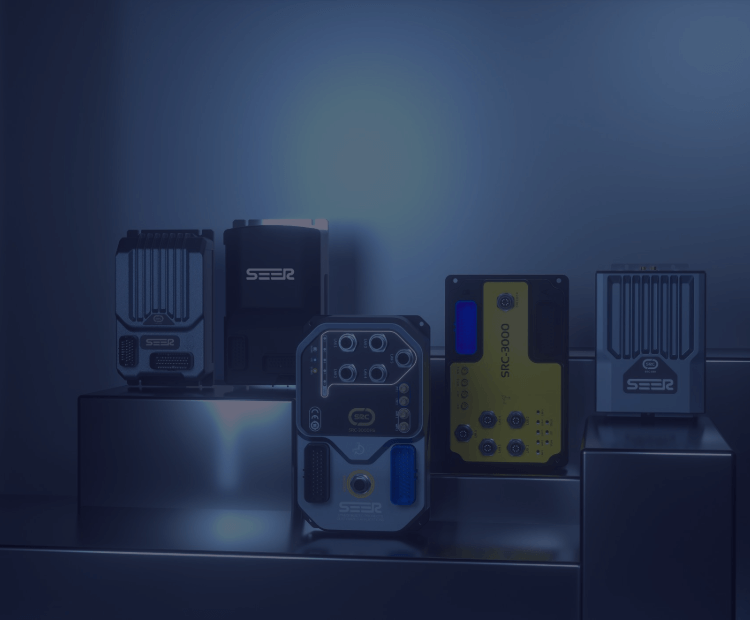
Comparative Insight: Why Old Control Stacks Stall
Where do breakdowns start?
Traditional approaches lean on monolithic logic, static maps, and rigid fieldbus chains. They work—until the floor changes. A PLC ladder program that once guided AGVs cannot adapt quickly to dynamic zones, mixed traffic, or ad hoc demand. High-latency links and uneven QoS across CAN bus or other fieldbuses compound this. You see it in jerkier motion, late obstacle handling, and route flapping. LiDAR fusion drifts when IMU calibration lags, and the safety PLC trips conservatively. The effect? Micro-stops stack into gridlock. Worse, operators rely on manual retuning after every layout tweak. Each tweak steals hours. Each hour dents throughput.
Look, it’s simpler than you think: the flaw isn’t a single component; it’s the architecture. Legacy stacks bind perception, planning, and actuation in tight couplings. A change in the navigation node ripples into the power converters profile or the brake curve. Deadlock detection runs outside the real-time window, so mitigation comes late. Firmware updates roll in batches, not streams, so fixes ship after the fact—and that’s the pinch point. When OTA updates are rare, predictive maintenance stays reactive. And when edge logs are thin, root cause analysis turns into guesswork. In short, the old model loses ground where modern floors demand elastic control, consistent QoS, and safe concurrency under load.
What’s Next: Principles Behind the Modern Controller
Real-world Impact
Let’s look forward with a clearer lens. A modern industrial robotic amr controller uses new technology principles: decoupled services, QoS-aware middleware, and a continuous data loop. Navigation, localization, and actuation become modular tasks that scale across edge computing nodes. ROS 2 or DDS manages priority lanes for safety and motion topics. SLAM updates no longer freeze planning; the real-time control loop keeps its deadline even as maps evolve. OTA pipelines push small, testable changes. Telemetry streams fuel anomaly detection. And safety stays central, with certified paths to the safety PLC and failover modes that degrade gracefully—never abruptly.
This shift is comparative at its core. Legacy stacks treat the robot as a closed machine; modern stacks treat the fleet as a living system. Instead of retuning per aisle, you define policies that adapt per load, time, and congestion. Instead of static cost maps, you run multi-layer planning with traffic rules and right-of-way. Edge logs sync to the cloud for root-cause and trend analysis, but decisions keep running locally. The net effect: tighter turns, fewer stops, and a measured lift in first-pass yield. It is not magic; it’s disciplined engineering with the right abstractions.

Here is the practical takeaway—condensed but forward-looking. We learned that legacy control binds motion to maps and people to manual retunes; hidden latencies and coupling drive stalls. The alternative brings service isolation, deterministic timing, and policy-driven behavior. If you are selecting your next industrial robotic amr controller, use three metrics: 1) Determinism under load: measure deadline misses in the real-time loop at peak traffic; 2) Adaptivity at the edge: verify how planning updates during SLAM changes and sensor noise; 3) Observability and safety: confirm end-to-end logs, QoS settings, and certified safety paths with clear failover. Make the comparison in your plant, not on a spec sheet—and track actual cycle time, not claims. For teams that value clarity and measurable control, the results speak for themselves. SEER Robotics
