A Practical Field Guide to Reception Desks: Comparative Insights on L‑Shaped Workflows
Introduction: Flow by Design, Not by Chance
In front-of-house planning, geometry sets the rules for movement, visibility, and speed. Reception Desks shape the first minutes of any visit—and they quietly define what staff can or cannot do. Picture a Monday rush: couriers at the corner, candidates at the bell, and three guests waiting for badges. Industry surveys suggest most visitors form an impression in under 10 seconds; throughput matters as much as style. That’s where an l shaped reception desk often seems like a tidy solution, but there’s more under the surface (literally and figuratively). If the layout mismanages reach zones, sightlines, or ADA clearance, it creates hidden friction that no amount of décor can fix. The question is simple: does your counter help staff move smarter, or make them move more?
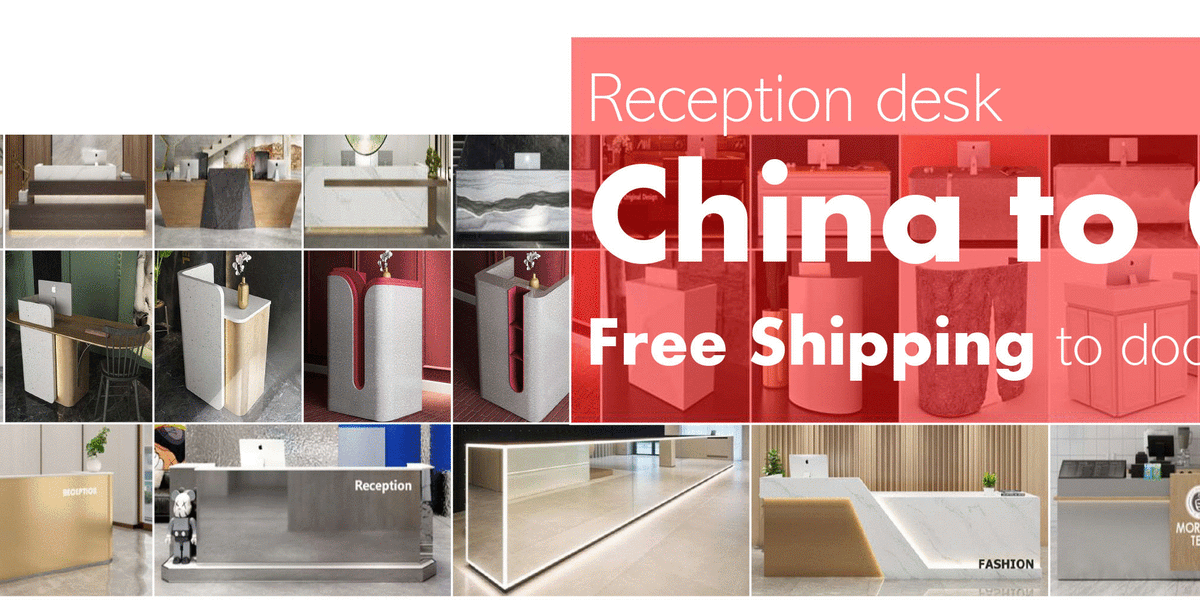
Let’s walk through the real sticking points and compare what actually works—without the usual guesswork.

Part 2: The Hidden Snags of L-Shaped Counters
Where do the snags actually occur?
Technically speaking, the L shape concentrates work zones into two perpendicular planes. That creates a “dead corner” where items live but rarely get used, and a crossover path where staff pivot more than they act. Look, it’s simpler than you think: the problem isn’t the letter “L,” it’s how the counter handles cable routing, privacy, and handoff. Poorly placed cable management grommets push devices into the corner, while a high transaction counter can block eye contact and slow ID checks. Meanwhile, the laminate substrate under a wide overhang may flex if overloaded by printers, leading to wobble during signing. And when ADA clearance isn’t respected at the turn, wheelchair users feel the constraint first—long before anyone notices the pretty edge banding.
Then there’s the blind-side issue. Staff seated at the short leg often lose sightlines to the entry, especially when a privacy panel rises above the work surface—funny how that works, right? Add a foot traffic pinch-point at the kickplate, and you’ve built micro-delays into every greeting. The result: extra reaches, extra pivots, micro-pauses. Multiply by a day’s flow and you’ve got measurable drag, not just mild annoyance.
Part 3: Forward Look—Principles That Make L-Shapes Work
What’s Next
Semi-formally put, the fix is principle-driven, not product-driven. First, design for continuous sightlines: lower the transaction top near the entry edge and angle the short leg by 10–15 degrees to reduce blind spots. Second, treat the corner as a pass-through artery, not a storage pit—run a cable tray behind the corner with two well-placed grommets so devices can float to active zones. Third, specify an underframe with reinforced cross members so the corner doesn’t bounce during signature capture. These aren’t luxuries; they’re operational controls. If you need compact footprints, a thoughtfully planned small reception desk can actually outperform a larger counter by prioritizing reach efficiency and ADA compliance over raw size.
Newer builds also borrow from modular millwork logic: swappable transaction shelves, adjustable privacy panels, and quick-release mounts for scanners. Add subtle upgrades—integrated power grommets to avoid adapter clutter, and a powder‑coated steel frame that resists racking under daily use—and you get durability without bulk. Compared to legacy setups, these changes cut average check‑in time, trim turning movements, and keep the greeting face open. Summing up without repeating ourselves: when the L supports clear sightlines, smart cable routing, and reinforced structure, staff stop “managing the desk” and start serving people. That’s the point.
Conclusion: How to Choose with Confidence
Advisory close, short and sweet. Evaluate any L-shaped option using three metrics: 1) Flow time per visitor: test a real check‑in and aim for consistent sub‑30‑second cycles with two staff positions active. 2) Ergonomic reach envelope: ensure all high‑use items sit within a 40–55 cm reach arc, and verify ADA turning radius at the inner corner. 3) Adaptability index: count how many components are modular—can you reconfigure privacy, swap a shelf, or reroute power in under 30 minutes without trades? If a model scores well here, it will perform well tomorrow, not just today—and it will still look good doing it. For perspective on modular options in this space, see M2-Retail.
